|
It’s been a busy week at the Broad River site! That’s to be expected, given that it’s the second to last day of field school. Last week we finished digging to depth in Units 4 and 6, so all we had to do now was draw wall profiles. Because these units will be hopefully reopened in a few months, we took care to preserve the floor. I was tasked with unrolling and cutting landscaping fabric, which was stretched across the floor and covered with about an inch of dirt. This allowed for easy travel across the floor without disturbing it. With the floor secured, we got to work shaving and mapping the profile walls. We completely flattened any marks left on the vertical surfaces surrounding our hole, so we could get the most accurate possible picture of the site’s stratigraphy. 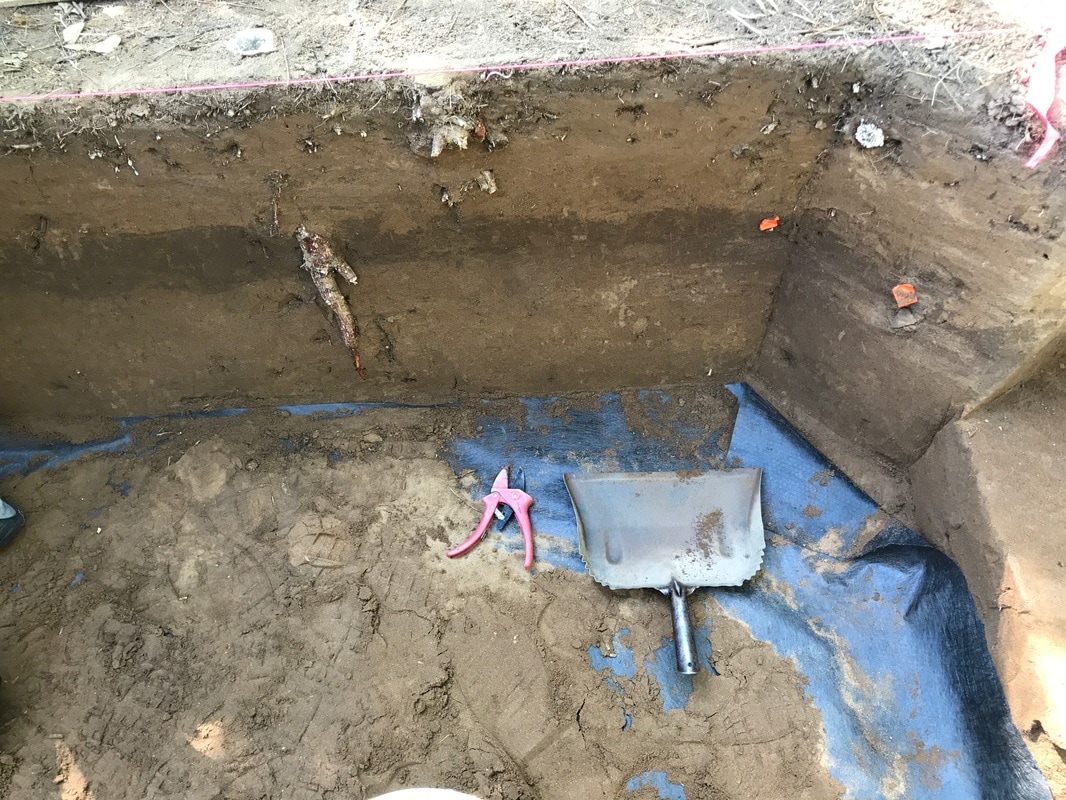 South wall of Unit 6. Dr. White then went through and marked the various stratigraphic zones with horizontal lines that we then drew on a sheet of graph paper. Kate and I finished drawing our wall and were able to take lunch early. After lunch, we set out to secure the walls in the same way we did the floor. We rolled more landscaping fabric around the edges and set boards of plywood against the walls so that they wouldn’t collapse while the site is deserted. The landscaping fabric allows for water to flow freely through the ground without actually moving any sediment. So the sand will stay in place, but won't become swampy and flooded. 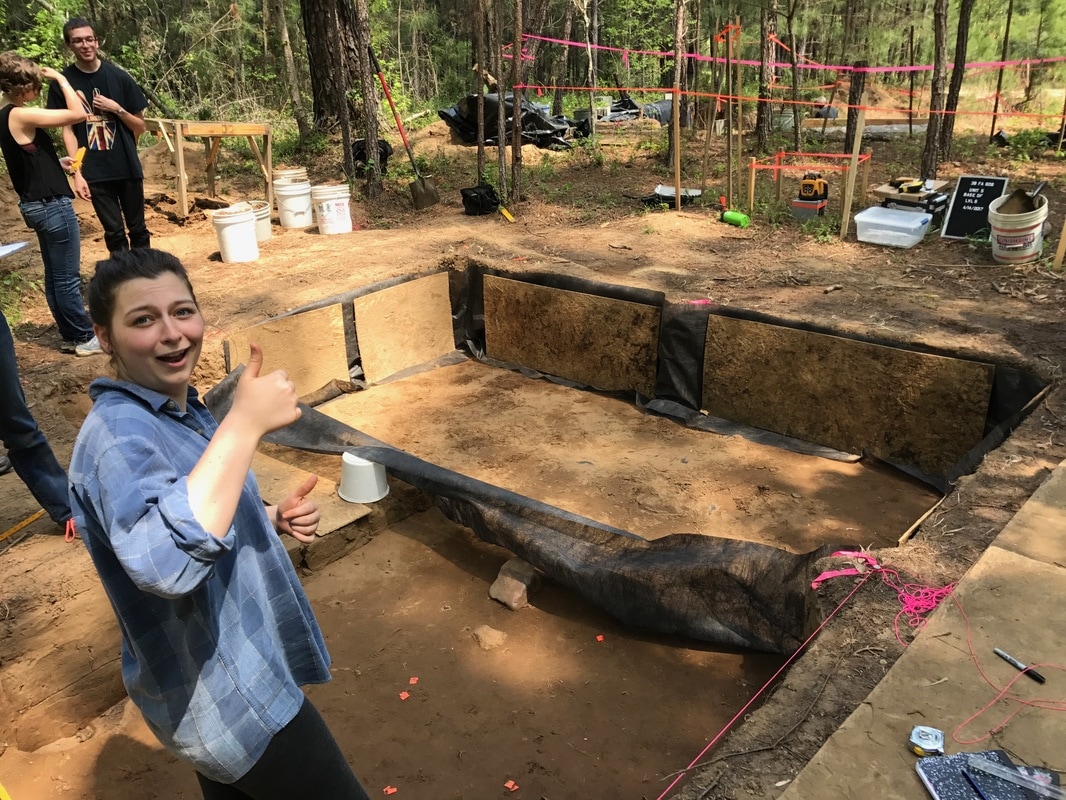 Units 4 and 6 prepped for backflling. Work continues in Unit 5. Jake and I were sent downstairs to help DuVal and Jim Legg secure the profile wall before backfilling it as well. We helped straighten the wall left by the Unit 9 collapse so DuVal could set plywood walls along the profile, behind which dirt would be poured to keep everything intact. After the walls were in place protecting Units 1 and 2, Jake and I started pouring dirt into the crevice between the plywood and the dirt wall. Unfortunately, the fill dirt began pushing out the bottom of the plywood structure and backfilling was halted until the wall could be reinforced with additional lumber (and backdirt piled along the exterior base). Jake and I returned to the upstairs unit to assist with backfilling there. The most heartbreaking part of the entire field school was piling dirt into a hole I'd spent all semester excavating. We began an assembly line with people scooping buckets of dirt and others lugging said buckets to the hole. We placed dirt around the edges first to keep the plywood secure throughout the backfilling process. We didn't quite finish filling the hole this week, but today was probably the most physically taxing of any day so far this semester. I would die happy if I never had to see another bucket of dirt. But alas, more buckets shall there be next week, on the last day of Spring '17 field school. 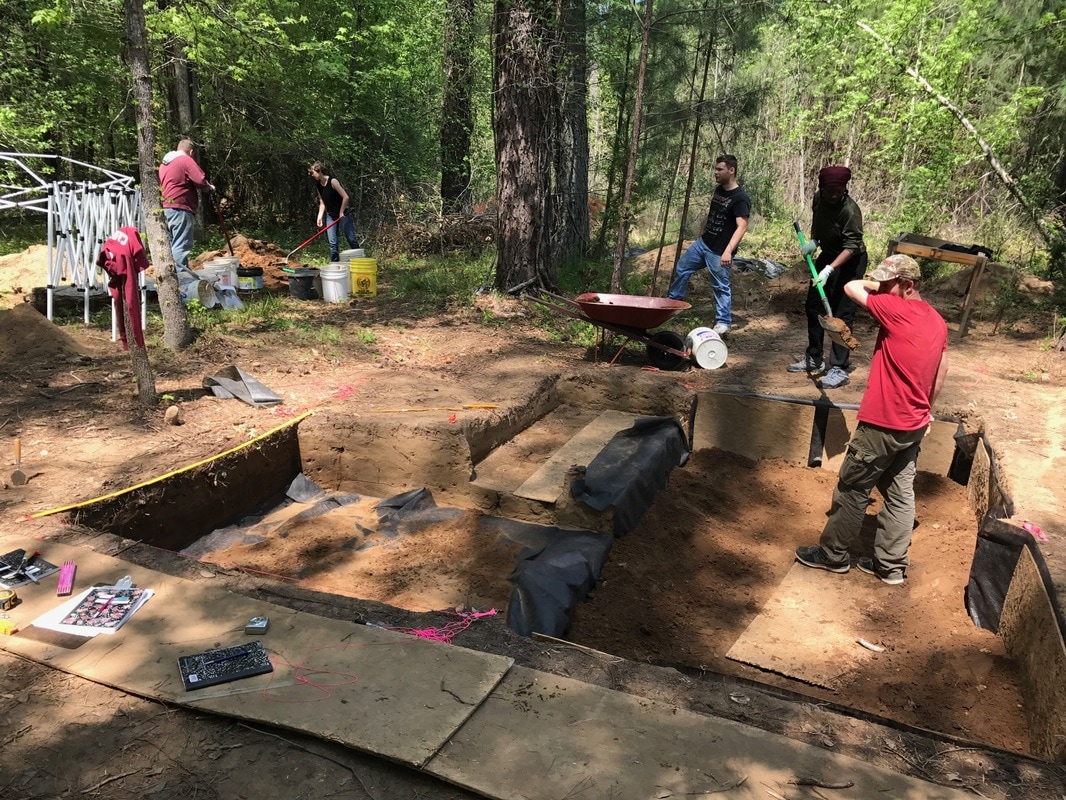 Dirt going back in the hole.
0 Comments
Leave a Reply. |
Student Blog (2017)Blog posts written by the students of the 2017 Broad River Archaeological Field School Archives
April 2017
Categories
All
|
 RSS Feed
