|
Day 3: this one was a little bit hectic. I was with a group working on Unit 12, where we broke ground the previous week. The other group was piece-plotting the items found in Unit 5 and then removed items that were exposed that they believed would not disturb too much of the soil (see JJ’s post for more details on what occurred in Unit 5). Having made two 1m x 1m units, we were now going to connect them with two more 1x1 units, making a large 2m x 2m unit. These units were still segregated in sorting and bagging, however, the plan was once it was all level it would be one 2m x 2m unit. 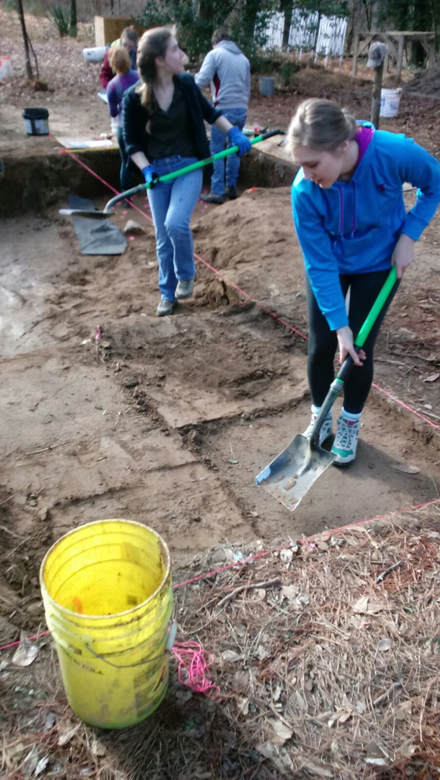 This worked out relatively smoothly. Despite my clumsiness I did not crack any walls or damage the site. We had help from a small group of DNR people and students who where interested in archaeology and they made the shifting go relatively faster. Once our unit turned into a nice and level 2x2, we were to take it down to the base of the first plowzone. A plowzone is a layer of dirt that is a distinguishably different color and is caused by people in the past plowing the land and disturbing the natural layers of the dirt. On our way to digging it down to the plowzone we found a very interesting piece of pottery, it featured kind of a wavy characteristic to the upper lip of it. 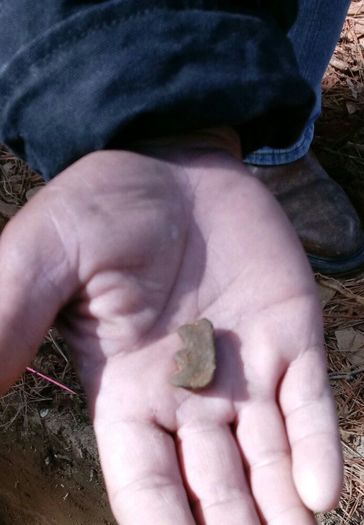 Once we got to the base of the first plowzone (the base of Level 2), and made it nice and level we were going to learn how to properly take a photograph of the unit. This involved clipping back as many roots as possible so that they would not be present in the picture. After that was taken care of we set up a board with all the important details of the site on it so that later in the lab we can tell exactly where that photo was taken. This board included the site’s designation (38FA608), the unit, the level, and the date as well as an arrow pointing north placed in the unit next to it. 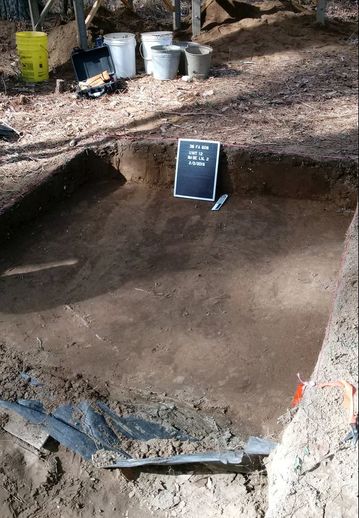 Overall take away from this week, is I learned to be more careful and methodical in my actions while at the site. I nearly damaged our unit multiple times through careless error and only did not by luck. However, this day was overall enjoyable as have been all the days working on this site and I look forward to getting dirty again next week!
0 Comments
Leave a Reply. |
Student Blog (2018)Blog posts written by the students of the 2018 Broad River Archaeological Field School Archives
April 2018
Categories
All
|
 RSS Feed
